
By Khatra, Clinical Director at KP Aesthetics, Hale
There are some conditions that affect more than just the skin.
Melasma is one of them.
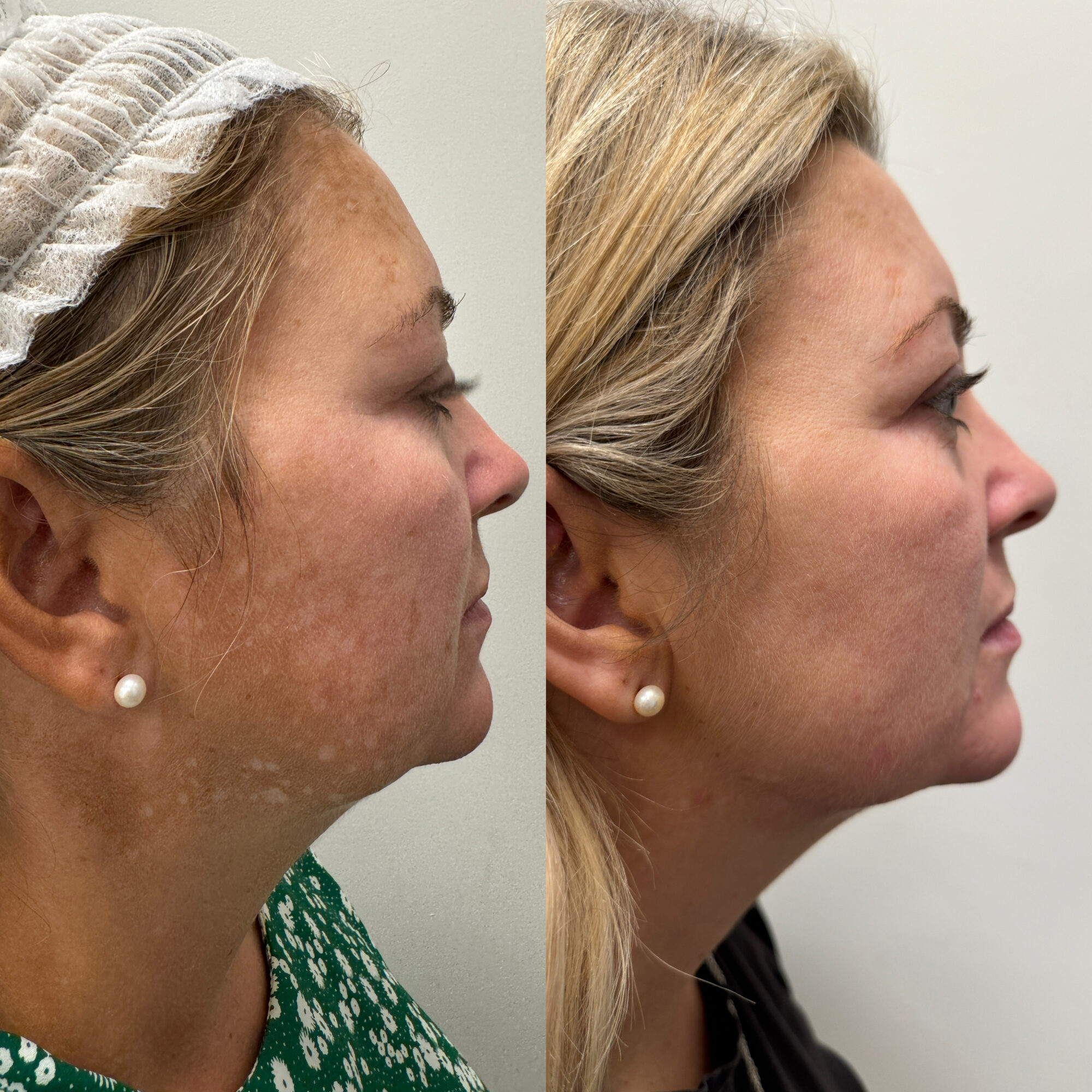
A 45 year old patient came to see me at KP Aesthetics in Hale after living with melasma for over twenty years. She had been told it was “just sun damage” when she was younger. Over time, it deepened. Spread. Became darker.
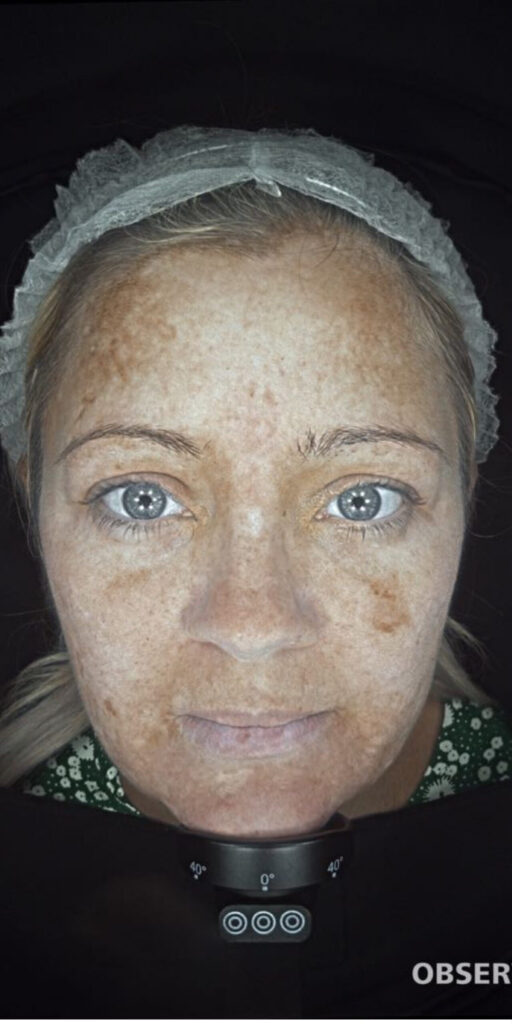
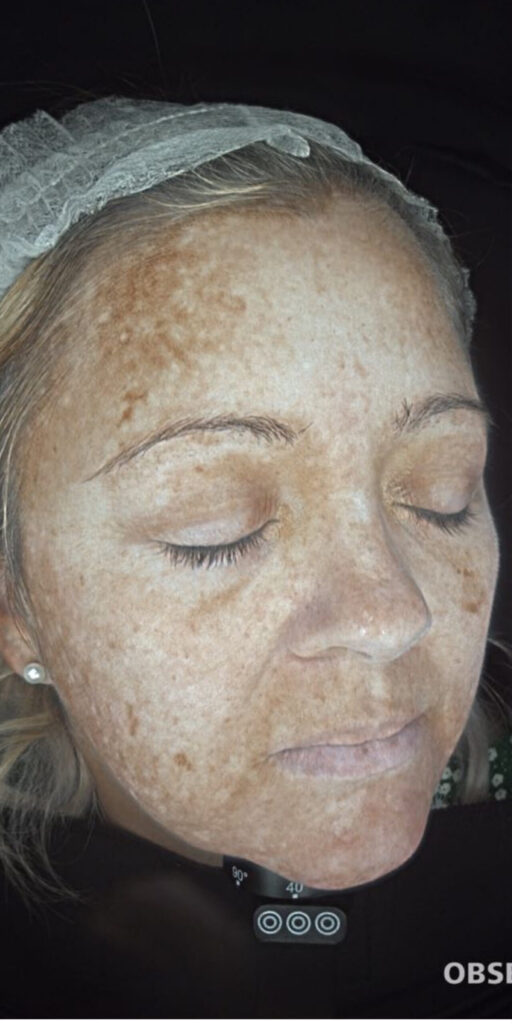
By the time she came to clinic, the pigmentation covered the sides of her face, her forehead, neck and ears.
But what stayed with me most wasn’t the pigmentation.
It was what she told me next.
She was using nearly twenty skincare products every single morning. It took her almost an hour to get ready. She would not leave the house without heavy makeup. She avoided swimming on holiday. She avoided bright lighting.
She felt exposed without coverage.
Melasma had quietly shaped her life.
What Is Melasma
Melasma is a chronic pigmentation disorder caused by overactive melanocytes. These are the cells that produce melanin, the pigment that gives skin its colour.
It is heavily influenced by:
• Sunlight and visible light
• Hormones such as pregnancy, contraceptive pill or HRT
• Heat
• Inflammation
• Genetics
It is often called the mask of pregnancy because up to half of pregnant women may experience it.
But it does not only affect pregnancy.
It commonly appears between the ages of 20 and 40 and can persist for decades.
And importantly, it is not just cosmetic.
It has a profound psychological impact.
Her Assessment in Clinic
During consultation at Hale Private Clinic, we carried out a full assessment including Observ 520x skin scanner imaging.
The scanner confirmed high density pigmentation consistent with melasma rather than simple sun damage.
It also showed something else.
Skin sensitivity.
Years of over layering products had compromised her barrier. Her skin was inflamed beneath the surface.
Before treating pigment, we had to stabilise the skin.
Our Treatment Plan
Melasma requires structure. Not guesswork.
We started with the ALLSKIN | MED Pigment Control Plan as a standalone approach for the first 21 days.
This included:
ALLSKIN | MED Pigment Capsules containing Fernblock, L Cysteine, Niacinamide and antioxidant support
ALLSKIN | MED Pigment Control Serum containing Kojic Acid, Niacinamide, N Acetyl Glucosamine, salicylic acid and a patented retinoid complex
Heliocare 360 Pigment Solution SPF50+ with protection against UVB, UVA and visible light
The goal initially was not aggressive lightening.
It was control. Barrier repair. Reduction in inflammation. Strict photoprotection.
After 21 days, we introduced prescription only Hydroquinone 4 percent cream once daily at night to target deeper pigment.
Hydroquinone remains one of the most evidence supported treatments for melasma when used correctly and under medical supervision.
This was carefully monitored and later tapered.
The Results
At Day 14 we saw visible reduction in pigment intensity.
At Day 30 the areas of hyperpigmentation were lighter and more uniform.
By Day 66 the change was significant.
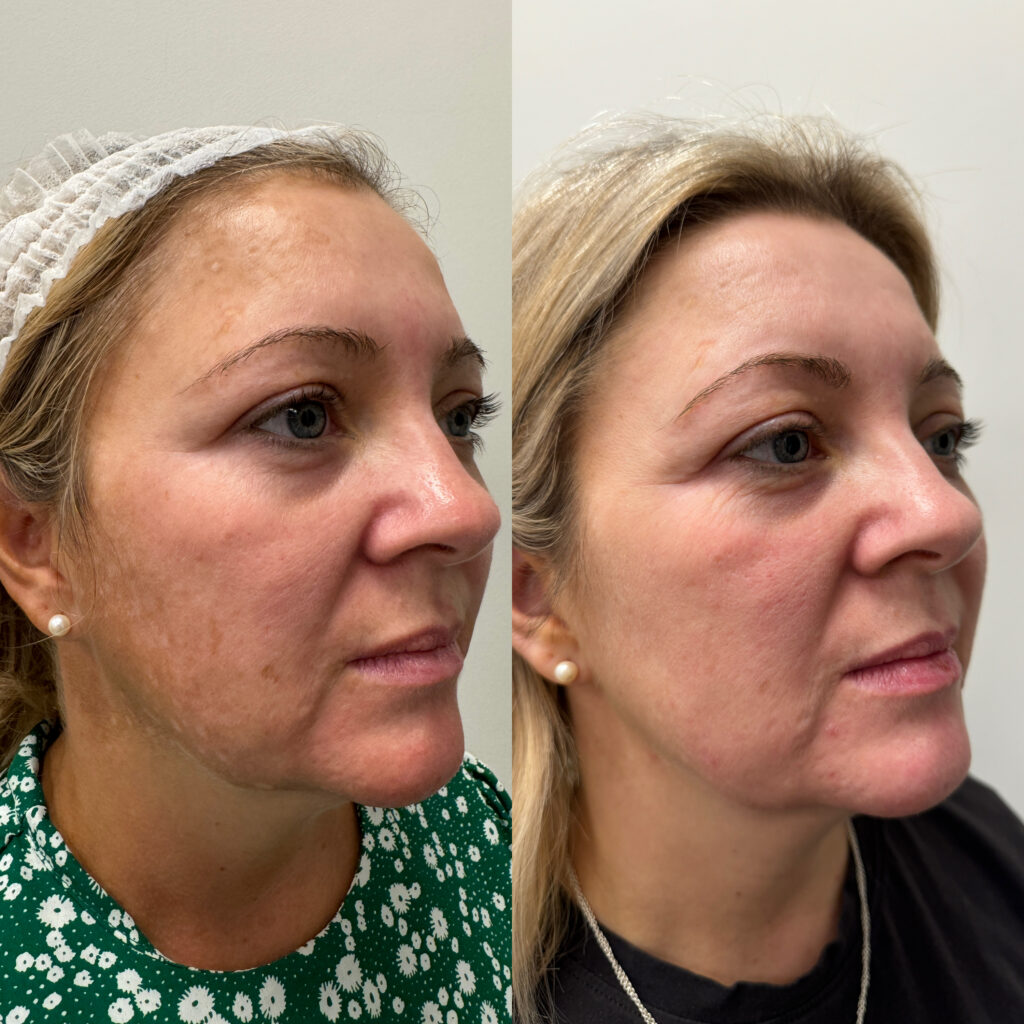
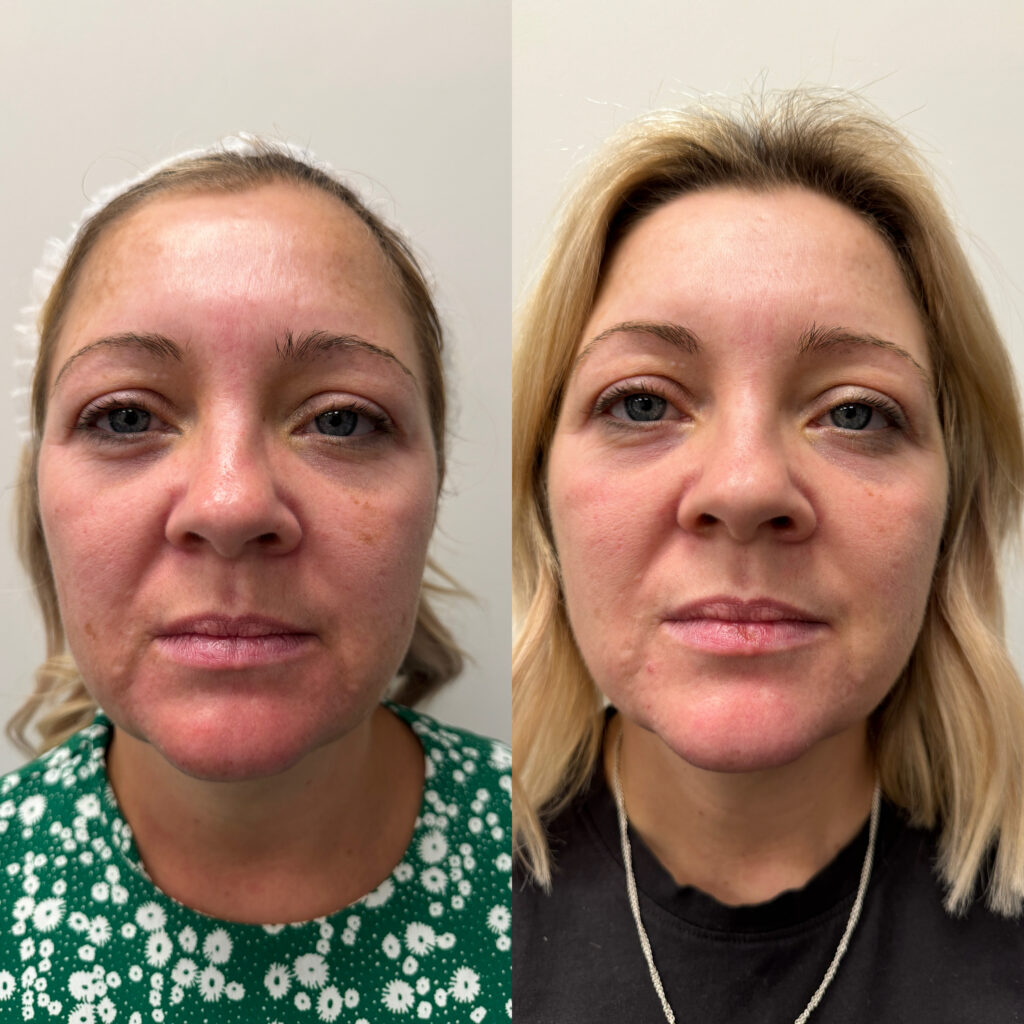
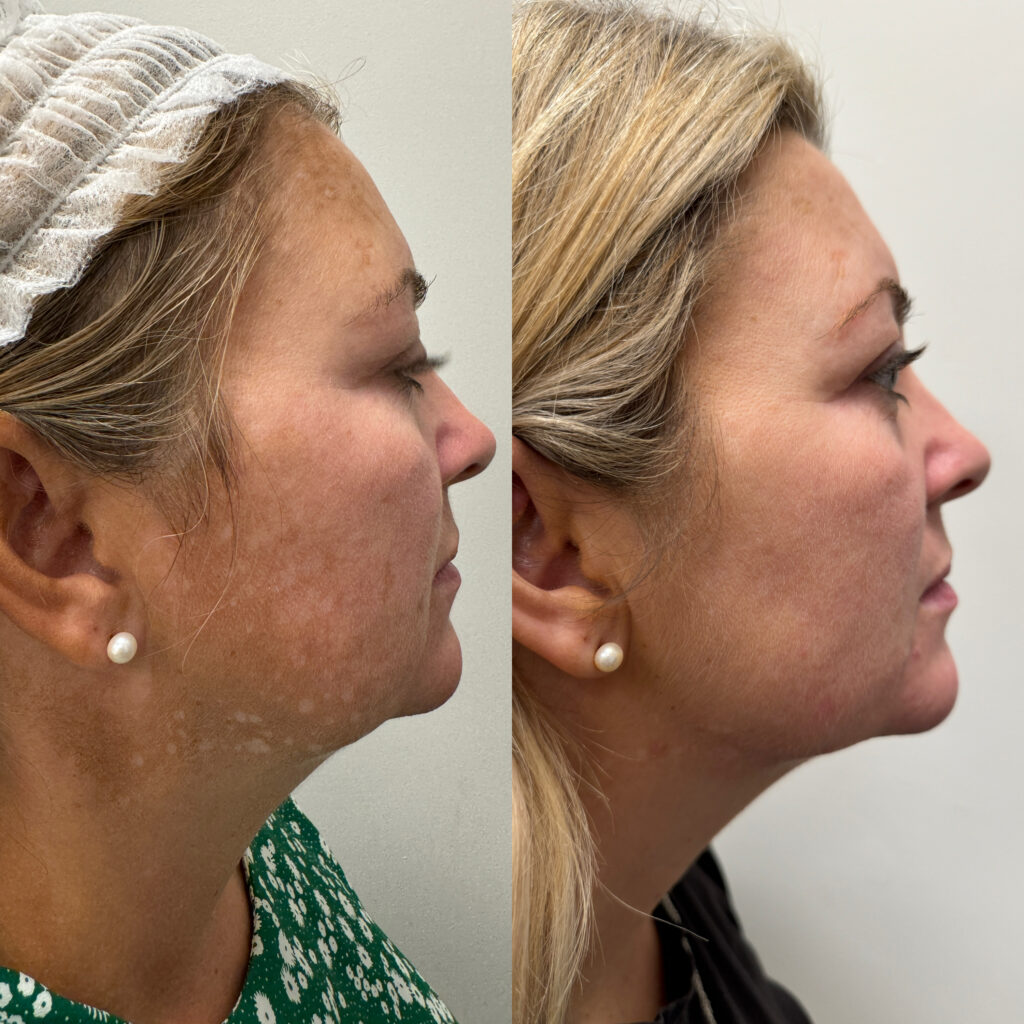
The pigmentation had reduced in area, depth and darkness.
But what mattered more was this.
She arrived at clinic without makeup.
For the first time.
Her skin looked brighter. Firmer. Calmer. Less reactive.
And she told me she had stopped using her twenty product routine.
She no longer felt the need to hide.
That is the real outcome.
Why This Approach Worked
Melasma is chronic and recurrent. There is no permanent cure.
But there is management.
What made this successful was:
• A simplified, evidence led routine
• Strict full spectrum photo-protection
• Oral antioxidant support
• Short term, supervised use of hydroquinone
• Barrier stabilisation before aggressive treatment
We did not use heat based devices.
We did not use aggressive lasers.
For this patient, that would have increased her risk of post inflammatory hyperpigmentation.
Treatment has to be personalised.
Important Considerations in Melasma Treatment
Ethnicity matters. Fitzpatrick skin type matters. Hormonal stage matters.
In skin of colour, the risk of post inflammatory hyperpigmentation is higher. Treatments must be even more cautious.
Hydroquinone must always be prescribed and monitored due to risks such as irritation or rare complications with prolonged use.
Full spectrum sunscreen protecting against visible light is not optional. It is mandatory.
Melasma treatment is not a quick fix.
It is a strategy.
Treating Melasma in Hale, Cheshire
At KP Aesthetics, based within Hale Private Clinic, 26 Park Road, WA15 9NN, we take a medical, structured approach to pigmentation.
If you are struggling with melasma in Hale or Cheshire and feel you are constantly covering rather than treating, book a consultation.
Because managing pigmentation is not about perfection.
It is about control.
And confidence.